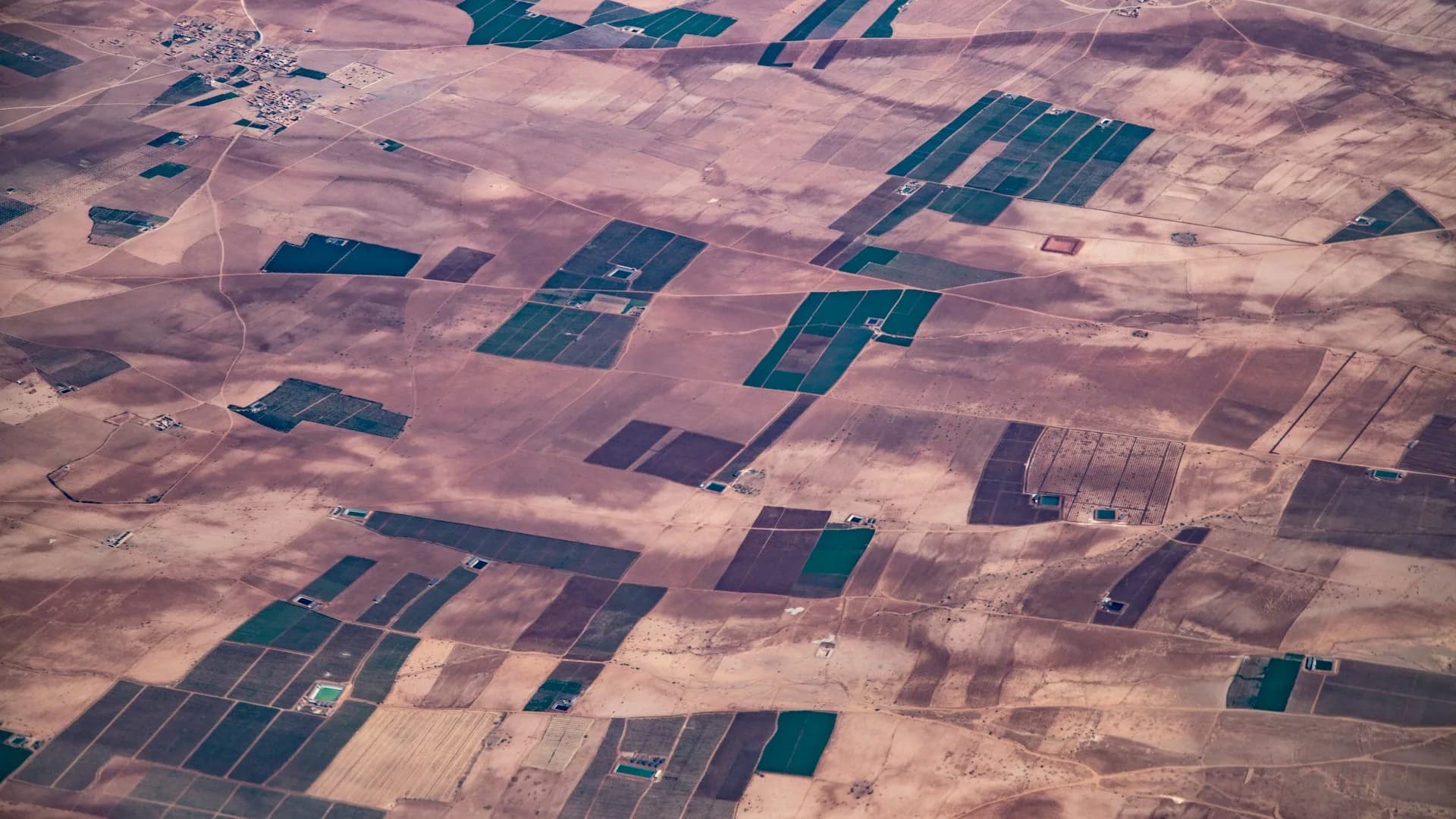
See How Your Land Is Changing
Land cover changes faster than maps can track. Cities expand into farmland, forests give way to roads and pasture, and wetlands shrink — often years before authorities, planners, or insurers can act on what is actually on the ground.
Sentient's Land Use & Land Cover platform classifies every pixel of your area of interest from multi-spectral satellite imagery, with periodic refreshes so transitions surface as they happen — not after the next census.
Detection Methodology
Imagery Ingestion
Pull cloud-free multi-spectral scenes from Sentinel-2 and complementary optical sensors, mosaicked across your area of interest at high spatial resolution.
Semantic Segmentation
A deep learning model classifies every pixel into land-cover classes — urban, cropland, forest, grassland, water, wetlands, and bare ground — trained on labeled global benchmarks.
Class Refinement
Boundaries are smoothed, speckle is removed, and class transitions are reconciled so the output reads cleanly from the parcel level up to the continental scale.
Change Detection
Compare classifications across years or quarters to surface land-cover transitions — deforestation, urban expansion, cropland conversion, wetland loss — with confidence scores per pixel.
Maps & APIs
Stream the result as interactive map tiles, downloadable rasters, or aggregated statistics by administrative boundary — ready for planning, reporting, and compliance workflows.
Key Features
National & Continental Scale
Run classifications across countries or continents — the pipeline scales linearly with imagery, no retraining required for new geographies.
Change-Detection Ready
Quantify how land cover is changing over time, by class and by polygon, to support sustainability disclosures and land-use compliance.
Standardized Taxonomy
Class definitions align with widely-used LULC schemas, so outputs slot into existing GIS, environmental, and planning workflows.
Recurring Refresh
New imagery is folded in on a recurring cadence so your maps reflect current conditions, not last decade's baseline.